Midsummer Garden Dispatches: Blooms, Tasks, and Timelines
What's happening in Pennsylvania beds and what Canadian growers should be doing before fall.
Midsummer Sales Reward the Patient Buyer
Nurseries and big-box garden centers typically run deep discounts in midsummer as the season winds down. The strategy: browse in spring to learn what's offered, then hold off purchasing until July or August clearance events. Selection narrows, but the savings are substantial—hard-to-find or in-demand varieties usually stay full price all season. Some specialty nurseries close by end of June; others stay open through summer but discount at a set point. Mark calendars a couple weeks ahead of expected closures to catch the best stock.
Seed Starting for Fall Crops Happens Indoors Now
Midsummer is the window for starting fall and winter vegetable seeds—indoors, since most seedlings tolerate extreme heat about as well as people do. Cool-tolerant options include broccoli, cabbage, chard, leaf lettuces, spinach, arugula, kale, bok choy, carrots, and Swiss chard. Carrots and beets develop sweeter flavor with a touch of frost. Gardeners with 60 days until their average first fall frost can still sneak in green beans if they choose 45-to-50-day varieties. Frost dates and hardiness zones—Ontario, Canada sits at Zone 6b—guide which crops are realistic.
Carla's Malvern Beds Hit Peak Diversity
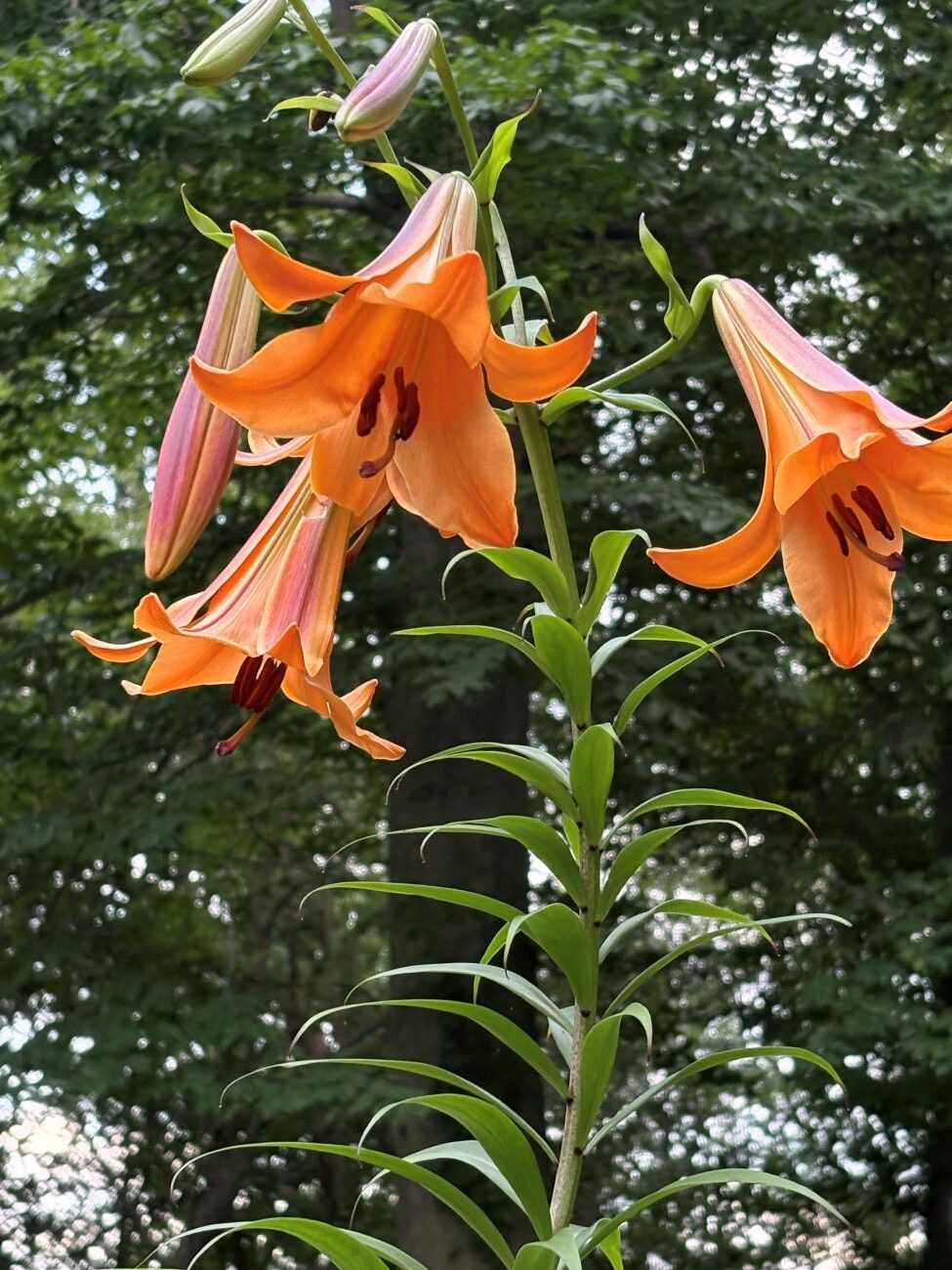
Carla's garden in Malvern, Pennsylvania, is running a July cycle of extreme heat, intense thunderstorms, and unusually cool stretches. Despite deer browsing her Oriental lilies—still reaching 5 feet this year—she's logging strong blooms on roses, clematis, and hydrangeas. 'Millennium' azalea (*Rhododendron* 'Millennium', Zones 5–9) is literally the last to bloom in her garden each season. An owl sculpture carved from a red oak (*Quercus rubra*, Zones 3–8) that once grew on the property marks the edge of the woods, surrounded by witch hazel, daffodils, roses, lilies, serviceberry, and peonies—a bed whose bloom shifts with the season.
Two Basil Varieties From Seed, Both Italian Heirlooms
Carla is growing Tuscan basil (*Ocimum basilicum* 'Tuscan', annual) and Neapolitan basil (*Ocimum basilicum* 'Neapolitan', annual) from seed this year, describing it as a wonderful season for the herb. Both are heirloom Italian varieties. She also grows the 'Costoluto Fiorentino' heirloom tomato (*Solanum lycopersicum* 'Costoluto Fiorentino', annual) from seed in giant pots, preferring seed-started plants over transplants.
'Moroccan Rose' Blooms Repeatedly With Minimal Fuss
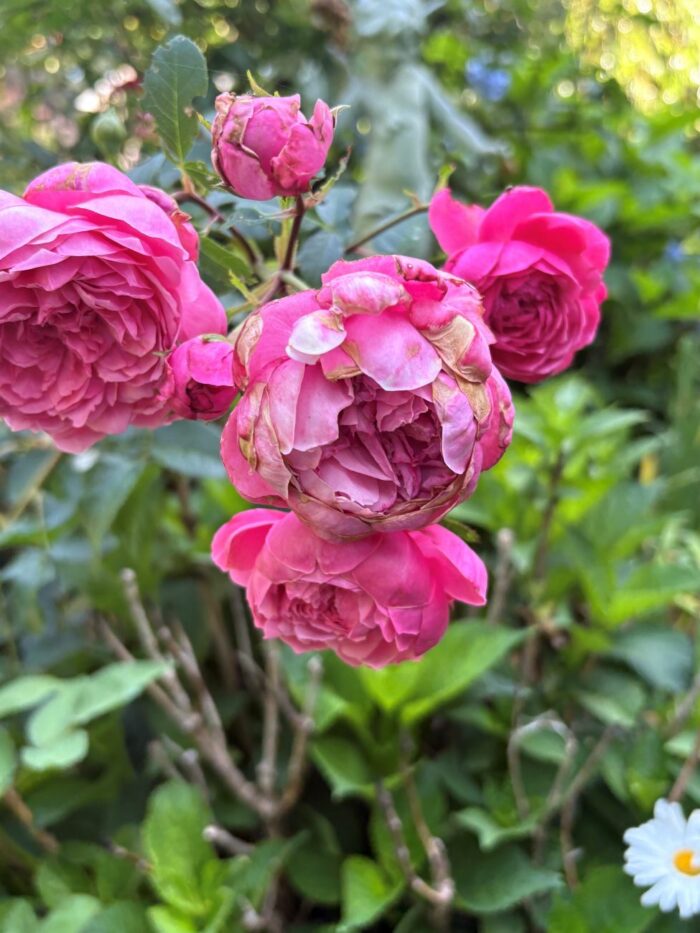
Rosa 'Moroccan Rose' (Zones 6–11) is an upright shrub collected years ago by an international rose rustler in Morocco. It carries damask and hybrid perpetual qualities and is a repeat bloomer—Carla describes it as easy to grow. Nearby, Clematis 'Tie Dye' (Zones 4–9) took a couple of years to establish before becoming a prolific summer bloomer. The combination of patience at planting and midsummer payoff is a recurring pattern in her beds.
Propagation by Cuttings Extends the Season
For most clonable plants, cuttings can be taken any time during the growing season. The principle: take them when the plant is not currently budding or blooming, so energy redirects toward root growth. Tomato plants are prime candidates—cherry varieties like Tiny Tim, with 45 days to maturity, may fruit before fall if started now from cuttings. Alternatively, they can be grown indoors over winter in a sunny location.
Deadheading and Composting Are the Non-Negotiables
Routine midsummer tasks split into must-do and nice-to-do. Watering newly planted plants and seedlings is non-negotiable. Deadheading—removing old flower heads and their stems—can trigger second and third blooming cycles. Compost bins and piles need turning and watering (as needed) to have finished compost ready by fall. Trimming and twine guidance keeps perennial climbers growing in the desired formation so they won't need severe correction later.
Hand-Picking Japanese Beetles Remains the Manual Option
Midsummer is peak time for garden pests. Japanese beetles can be hand-picked; opinions on pheromone traps are mixed—yes, they catch beetles, but the pheromones also attract more of them to the garden. Powdery mildew, lurking all season, becomes evident midsummer on leaves like squashes; prevention and early action are the best bets. Properly identifying any pest and understanding its life cycle is the first tool. Squash borer moths and their eggs can be caught before borers hatch and decimate crops.
Garlic Scapes Signal Harvest Is a Month Away
Garlic scapes—the tender flower buds of hardneck garlic plants—ripen about a month before bulb harvest. Cutting them allows the plant to direct energy into bulb production. The scapes themselves are culinary; numerous recipes exist online. This is also the window for preordering specialty garlic varieties that sell out by fall, scheduling delivery for fall planting alongside cold-hardy spring-flowering bulbs.
Bolting Threatens Lettuce Crops in Heat
Summer heat drives lettuce and leafy greens like arugula to bolt—jumping to premature seed production and skipping the edible stage. Adding shade with screens or covers, or moving containers out of full sun, can prevent the problem. 'Cut and come again' harvesting—leaving roots to regrow while taking select leaves—extends the life of leafy greens through warmer stretches.
Hydrangeas Anchor Carla's Shade Beds
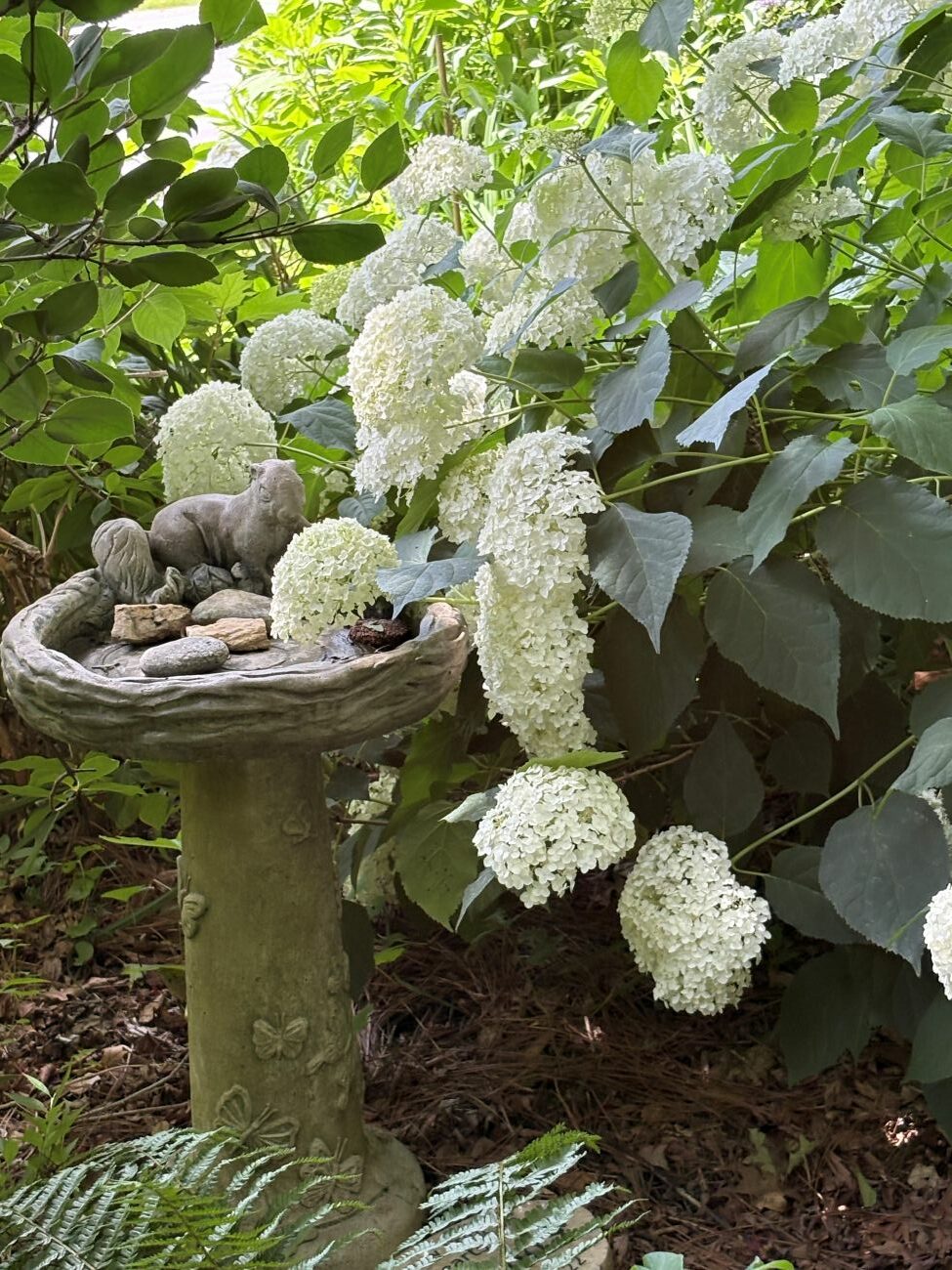
'Annabelle' smooth hydrangea (*Hydrangea arborescens* 'Annabelle', Zones 3–9) sits next to a birdbath in Carla's garden. Lime Rickey smooth hydrangea (*H. arborescens* 'Lime Rickey', Zones 3–9) adds cool green in the heat. Cherry Explosion bigleaf hydrangea (*H. macrophylla* 'McKay' Cherry Explosion, Zones 4–9) blooms beside a Buddha sculpture in the same spot as a pink lacecap. The Hamptons on Long Island, New York, reminded Carla of the range of hydrangea cultivars that thrive in Northeast gardens.
Keep reading
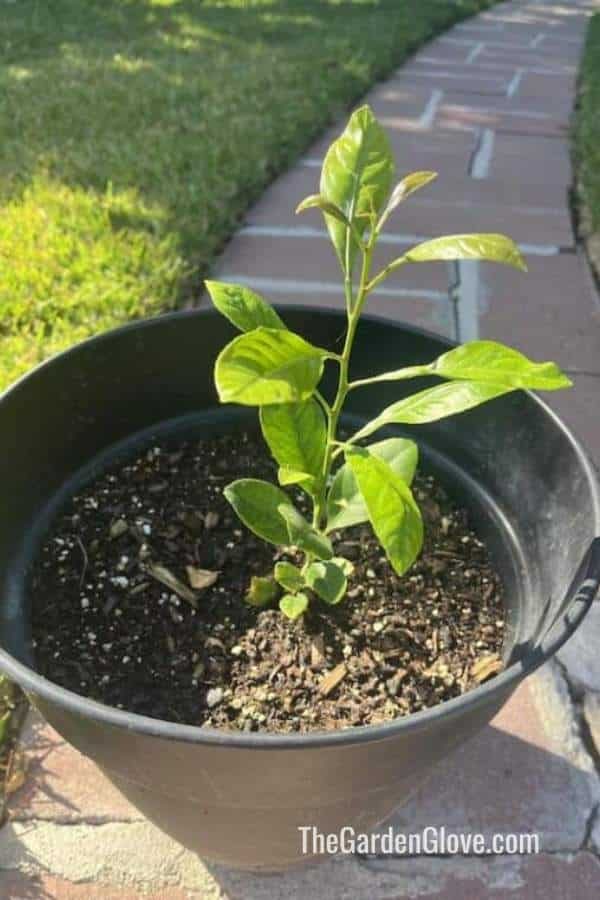
The 7 Decisions That Determine Your Lemon Tree's Fate
From picking the right seeds to deciding on a nursery tree, these seven choices cover pot, sun, transplant timing, pest control, and long-term care.

6 Auto-Insurance Moves That Lower Your Premium, Not Your Protection
Understanding full coverage, using repair costs to set deductibles, cleaning your record, stacking discounts, weighing service over price, and blending digital quotes with human advice—these six tactics cut costs without cutting coverage.

7 DeWalt 20V MAX Tools Ace Hardware Is Bundling With a Free $169 Battery Kit
For a limited time, Ace Hardware throws in a 20V MAX XR Battery and Charger Starter Kit at no extra cost when you buy any of these bare tools from DeWalt's ATOMIC or XR lines.