Crafts
Turn Damaged Book Pages Into a Textured Paper Wreath
Roll old pages into narrow tubes, bundle them with twine, and layer them around a wreath form for seasonal decor with little added finish.
Crafts 5 steps 5 topics
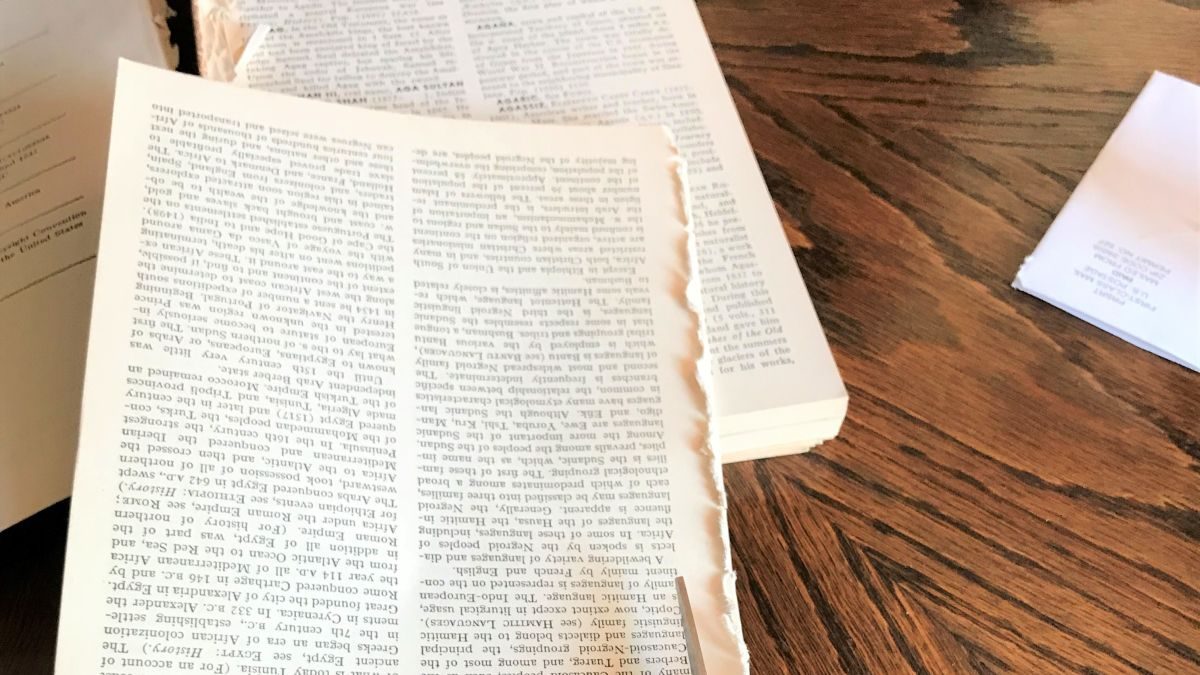
Give damaged pages a second life
Pages separated from an old, unreadable book can become the decoration itself. The printed text supplies a pattern without paint or added finish, while small variations in the paper rolls create a textured, irregular surface.
Dee from Our Clover House used damaged book pages, a wreath form, scissors, twine, hot glue, and a wooden skewer. Pages printed edge to edge keep the text visible across most of each finished roll.
Cut and roll the paper
Cut the pages into workable sections that can wrap around a skewer without creating oversized tubes. Place the skewer near one edge, then roll the paper tightly around it. A small center opening gives each piece enough structure to hold its shape while keeping the printed surface exposed.
Secure the loose edge with a small amount of hot glue. The rolls do not need to match exactly. Different lengths will help produce staggered ends and a less rigid outer edge once the wreath is assembled.
Bundle the rolls with twine
Make enough tubes to cover the entire wreath form. This takes more paper than the finished wreath may suggest because the pieces overlap and sit at several angles.
Group several rolls with twine, combining different lengths so their ends are staggered. The rough fiber adds contrast to the repeated black-and-cream print without hiding much of the paper.
Build a dense ring around the form
Hot-glue the bundles around the wreath form, crossing and overlapping them rather than arranging them in one uniform row. Varying the roll direction, length, and angle helps conceal the base and creates depth. Dried moss may appear between the paper, but it is optional.
Continue adding layers until the form disappears. Keep the center open so the wreath shape remains clear. From a distance, the rolls read as textured material; up close, the lines of text become the detail.
Finish it for the season
Orange, rust, and deep red faux flowers can turn the neutral paper wreath into fall decor. Add them to one section so most of the book-page texture remains visible. Leaving the flowers off, or replacing them with another accent, makes the same base suitable for other seasons.