The Cell Goblin Ranks Hundreds of Salvaged LFP Cells So You Don't Have To
A custom ESP32-S2 tester, a five-bay rig, and a lightweight software stack turn reclaimed lithium iron phosphate cells into a ranked, usable pack — and the whole system is open to replicate.
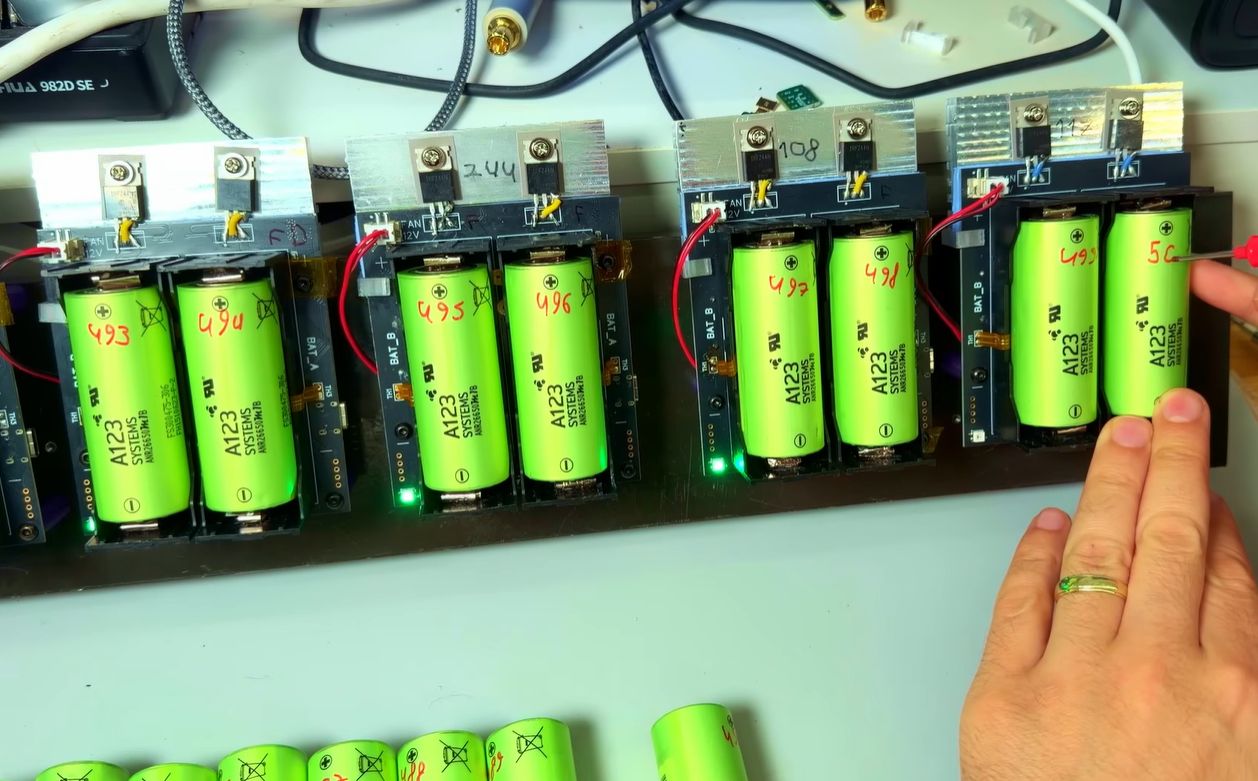
The Cost Calculus of Salvaged Cells
Lithium-ion cell prices have dropped steadily, but sourcing hundreds of high-quality cells for a performance build still stings. Commercial battery packs — the kind found in EVs and energy storage systems — contain cells that often have plenty of life left, provided someone sorts the good from the degraded. That sorting step is the catch. Manually testing each cell with a multimeter and a load resistor is feasible for a dozen cells; at scale, it becomes a multi-week chore with no guarantee of consistency. Within Tolerance faced exactly this arithmetic when planning a go-kart battery pack and decided the economics of stripping old packs outweighed the cost only if the testing bottleneck could be eliminated.
768 Cells, Ten at a Time
The project sourced 768 lithium iron phosphate (LFP) cells from decommissioned commercial packs. LFP chemistry trades energy density for thermal stability and cycle life, making it a common choice for stationary storage and increasingly for EVs — which means the secondary market is flush with cells that have logged years of service but retain meaningful capacity. Within Tolerance built five dual-cell tester boards, giving ten simultaneous test slots. Each board handles one cell independently: charging it to a defined threshold, discharging it while logging capacity, and measuring internal resistance. The rig processes cells in batches, and even at ten at a time, the full run stretches across weeks. At the time of the project's video publication, testing was still underway — a candid measure of the sheer volume involved.
Cell Goblin: An ESP32-S2 Tester on a Custom PCB
The heart of the system is a custom PCB designed around the ESP32-S2 microcontroller. Each board manages two cells, handling charge control, discharge load switching, voltage measurement, and temperature sensing. Firmware is written for PlatformIO and flashes over USB. The board design went through at least one revision; the video describes PCB-level issues that have since been corrected in the repository's hardware directory, which ships Gerber files ready for fabrication. An internal resistance meter connects to the host PC via UART, feeding impedance readings into the same dashboard as the charge-discharge data. The entire hardware stack — schematics, Gerbers, source files — is published under an MIT license on GitHub as the Cell Goblin project.
The Software Stack: Hub, Dashboard, and Alerts
On the host side, a hub application polls each tester board over the local network, stores results in a database, and exposes a WebSocket API. A separate dashboard displays real-time cell status, historical test results, and internal resistance readings on a dedicated page. The hub can fire Home Assistant webhooks when all occupied bays finish or when telemetry drifts out of range — cell temperature, heatsink temperature, or voltage outside the chemistry's charge window. An Alexa announcement integration means the builder gets a voice alert in the workshop when a batch is done. Board IPs are configured through the dashboard's Settings panel, and the pass threshold in milliamp-hours is adjustable at runtime.
What the Build Reveals About Second-Life Cells
The project doubles as a stress test of the second-life cell supply chain. Not every cell pulled from a years-old pack will meet the capacity threshold set for the go-kart; some will have elevated internal resistance, others will have lost significant capacity. The automated tester quantifies each cell's actual milliamp-hour delivery and impedance, producing a ranked inventory rather than a hopeful guess. That data determines which cells make it into the final pack and which get recycled or repurposed for less demanding applications. The open-source release means anyone replicating the rig can tune the pass criteria to their own project's tolerance — whether that is a go-kart demanding consistent discharge rates or a stationary storage build where capacity fade matters less.
Replicating the Rig: What You Need
The Cell Goblin repository lays out the full stack: PlatformIO firmware for the ESP32-S2 boards, Node.js for the hub and dashboard, and Python if you want the internal resistance meter bridge. The PCBs can be ordered directly from the included Gerber zip. Five boards are the sweet spot for parallel throughput — ten cells tested simultaneously — but the system scales: add more boards, add more IPs in Settings, and the hub handles the rest. One practical note from the build: the firmware supports compile-time Wi-Fi defaults via a private header file, so a freshly flashed board can connect to the network and hub without serial configuration, but runtime commands override those baked-in values. The dashboard's Start All button kicks off every occupied bay simultaneously, and results persist in the database across restarts.
Keep reading

6 Auto-Insurance Moves That Lower Your Premium, Not Your Protection
Understanding full coverage, using repair costs to set deductibles, cleaning your record, stacking discounts, weighing service over price, and blending digital quotes with human advice—these six tactics cut costs without cutting coverage.

7 DeWalt 20V MAX Tools Ace Hardware Is Bundling With a Free $169 Battery Kit
For a limited time, Ace Hardware throws in a 20V MAX XR Battery and Charger Starter Kit at no extra cost when you buy any of these bare tools from DeWalt's ATOMIC or XR lines.
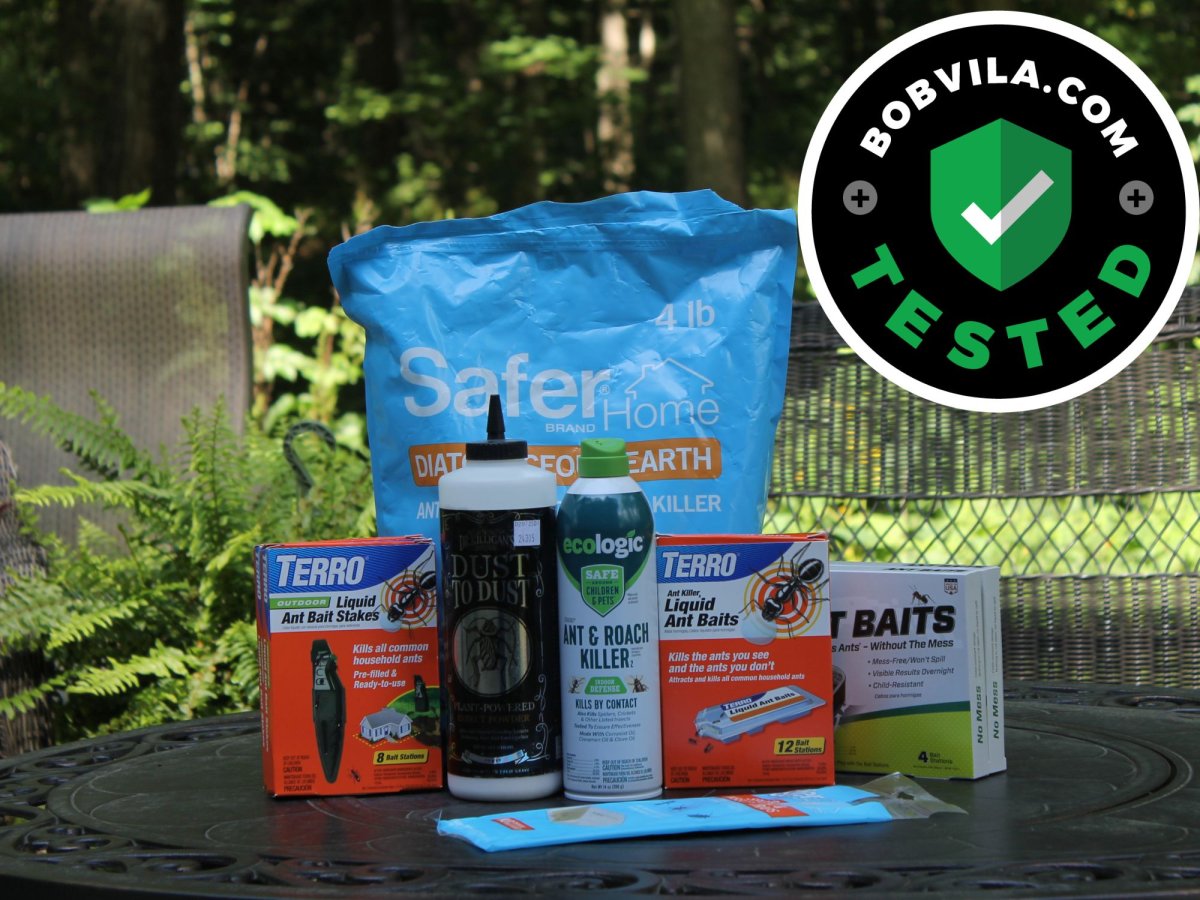
7 Store-Bought Ant Killers, Tested for Six Weeks: The Weakness in Each
Six weeks of in-home testing rated seven ant killers on ease, effectiveness, and value, revealing the specific failure point of every product.