7 Model Railroad Roadbed Materials, Ranked by How They Handle on a Real Layout
From preformed homasote to cork sheets to no bed at all, here's what each foundation does well and where it falls short.
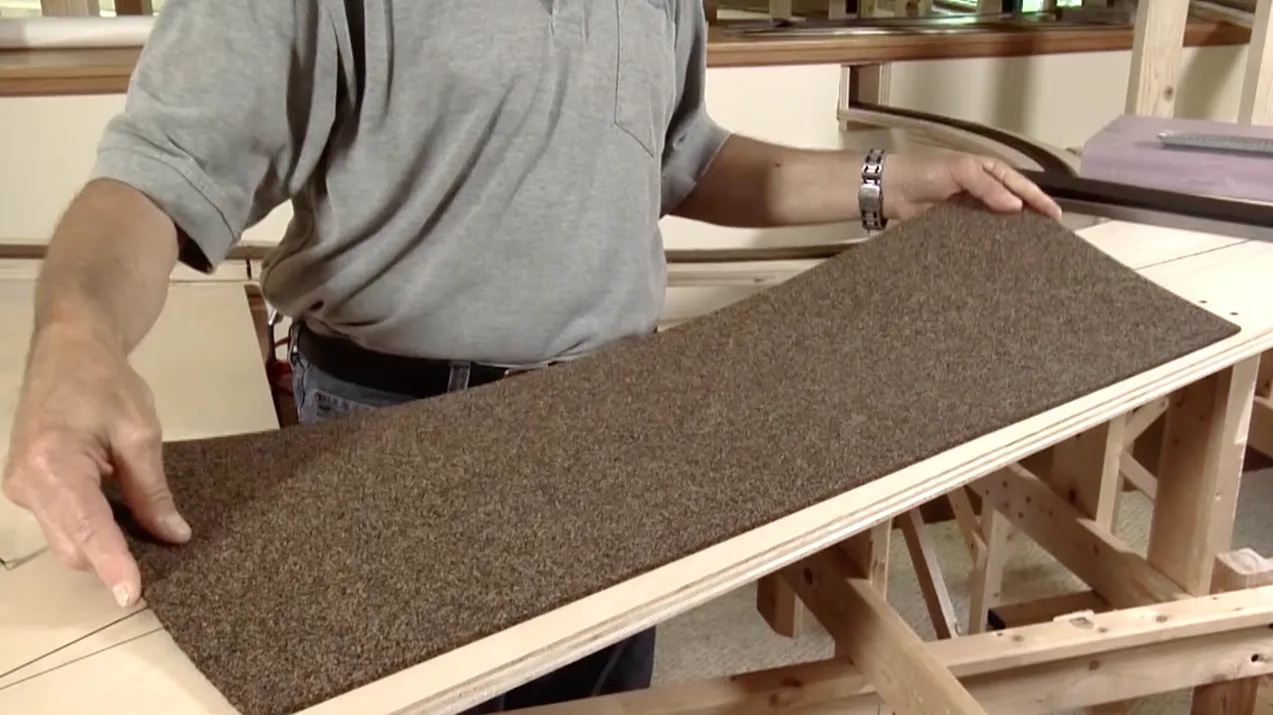
Preformed Homa Bed Bends Around Curves Without the Dust
California Roadbed's Homa Bed takes the good properties of homasote—sound deadening and spike grip—and removes the worst part, which is cutting 4x8 sheets. The material arrives as preformed homasote sections with a beveled edge for ballast angle of repose. You pick between 45-degree and 60-degree side angles; 60 degrees more closely matches the prototype. The sections include straight pieces and turnout pads, and many have kerfs cut across the base so you can bend them around curves. Once glued or nailed to your subroadbed—plywood or pink extruded foam both work—the kerfed sections hold the radius without springing back. Because the shape is already cut, you avoid the snow flurry of dust that raw homasote produces. The trade-off is cost and the need to work around preformed sizes for custom geometry. For a long mainline with broad curves, this is the most efficient quiet roadbed.
- Material: Preformed homasote
- Sound: High dampening
- Curve handling: Kerfed
- Best use: Mainlines
Cork Strips Remain the Default for Good Reason
Midwest Products' cork strips are the default roadbed for a lot of layouts, and for good reason. A 3-foot section splits down the center, giving you two halves, each with a taper that creates a natural shoulder for ballast. You can attach cork with caulk, nails, or glue. The material is forgiving enough to hide minor surface irregularities in the subroadbed, and it accepts spikes if you hand-lay track, though not with the same tenacity as homasote. Cork's sound dampening is moderate—better than bare plywood, but not as quiet as foam or compressed paper. The biggest annoyance is curves: 3-foot sections don't bend smoothly, so you'll be cutting and fitting pieces, especially on tight radii. For a typical mixed-era layout with turnouts and sidings, cork strips give you a solid, low-fuss foundation that looks right under ballast. Just lay a straightedge and plan your joints.
- Material: Cork
- Sound: Moderate
- Spike holding: Good
- Curve handling: Needs cutting
- Best use: General layouts
Track-Bed Foam Quietly Absorbs Subroadbed Imperfections
Woodland Scenics' Track-Bed is a quarter-inch foam roadbed with a center split and molded side bevels, so installation looks like cork but feels softer. You attach it with Woodland Scenics' foam glue to the subroadbed, whether that's a wood deck or a rigid foam base. The foam's compressibility is its main advantage: it quiets wheel noise effectively and will take up minor lumps—a slightly high screw, a dipped plywood seam—without telegraphing them to the track. It's also easy to cut with a hobby knife. The catch is that the same softness means it won't hold a poorly aligned flex track in place. If a rail joint is slightly off or a curve has a kink, the foam conforms to the problem instead of correcting it. For straight runs and broad, well-laid curves, Track-Bed is an economical, quiet choice, but don't use it as a crutch for trackwork mistakes.
- Material: Foam
- Sound: High dampening
- Thickness: 1/4 inch
- Best use: Straight and broad cur
Raw Homasote Is the Veteran, With a Snowstorm of Dust
Raw homasote is the veteran roadbed. It's a compressed paper product—gray because the recycled paper contains ink—and it's sold as half-inch sheets, usually 4x4 or 4x8, at home centers. Its two strengths are unmatched in this roundup: it deadens sound better than cork or foam, and it holds track spikes extremely well. If you're hand-laying flex track, homasote grips each spike securely. The problem is cutting. A two-foot section cut on a portable table saw generates a snow flurry of paper dust. Plan to work outdoors, wear a respirator, and clean up immediately. Another limitation: raw sheets have no bevel, so you'll need to shape them or accept a square edge under your ballast. For a large layout where noise reduction is the priority and you're willing to handle the dust, half-inch homasote remains a strong, proven option.
- Material: Compressed paper
- Sound: High dampening
- Spike holding: Excellent
- Thickness: 1/2 inch
- Best use: Hand-laid track
Sectional Track With Molded Roadbed Skips the Foundation Question
Atlas, Bachmann, PIKO, and KATO all sell sectional track with the roadbed molded onto the bottom of the rails. KATO's Uni-track is one example. Whatever the brand, segments snap together and make a uniform joint with no separate roadbed to cut or glue. This is the answer for a temporary layout, a portable module, or running trains on the carpet—you can assemble and store it in minutes. The molded roadbed comes pre-attached, so there's no spike, ballast, or bevel decision. The trade-off: you're committed to that manufacturer's geometry, curve radii, and tie spacing. The molded profile often looks heavier than a scale ballast shoulder, and when you want a permanent, custom scene, you'd replace track anyway. But for quick operation or a beginner's first layout, integrated roadbed removes the whole foundation question.
- Material: Molded roadbed
- Manufacturers: Atlas, Bachmann,
- Best use: Temporary or portable
Cork Sheets for Industrial Track That Sits Flush
Midwest Products also makes cork in flat sheets, which solve a different problem: track that should appear to sit directly on the ground. Industrial sidings and yards often look wrong with a raised roadbed profile. A cork sheet laid flat on the subroadbed gives you a level, stable surface that still accepts glue and spikes, without the tapered shoulders of strip roadbed. You cut the sheet to match the track footprint and any turnouts or crossing. Because the cork is thin, sound dampening is modest—you get more of a visual solution than an acoustic one. The sheet texture takes ballast well, but you should match the ballast to the surrounding scene, not use a mainline shoulder. For a switching district or engine terminal, cork sheets let you mount track flush and keep the right look.
- Material: Cork sheet
- Best use: Industrial, yards, eng
Skip Roadbed Entirely for Yards and Industrial Ground
For certain scenes, the correct roadbed is none at all. If you're modeling an industrial area or a yard where the prototype ran track directly on the native ground or gravel, a raised cork or homasote foundation would be visibly wrong. You mount track straight onto the subroadbed—typically a wood or foam surface—and bring ballast up to the ties. This saves time, material, and height, which matters in a cramped switching layout. The cost is sound: without a cushion, wheel and rail noise travels straight through the benchwork. One remedy is a very thin cork sheet only where needed, but that reintroduces the profile you're trying to avoid. The real requirement is a perfectly flat subroadbed and solid track anchoring, because you've lost the forgiving layer that would absorb small imperfections. In a yard full of turnouts, that flatness is hard to beat.
- Material: None
- Best use: Industrial areas, yard
- Sound: Low dampening
Keep reading

6 Auto-Insurance Moves That Lower Your Premium, Not Your Protection
Understanding full coverage, using repair costs to set deductibles, cleaning your record, stacking discounts, weighing service over price, and blending digital quotes with human advice—these six tactics cut costs without cutting coverage.
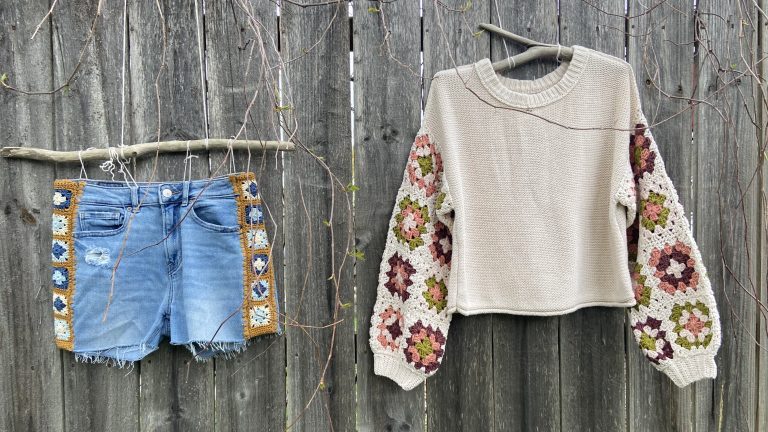
6 Crochet Upcycling Lessons from Brenda K.B. Anderson
Brenda K.B. Anderson's six-lesson course shows how to salvage yarn, resize denim with granny squares, and open seams — plus how to teach these techniques to others.

The 7 Decisions That Determine Your Lemon Tree's Fate
From picking the right seeds to deciding on a nursery tree, these seven choices cover pot, sun, transplant timing, pest control, and long-term care.