8 Barn Fire Hazards You're Probably Overlooking — and the Exact Fix for Each
From hay that self-ignites to a cigarette butt and a door that won't swing outward, these eight risks show where fires start and the measures that stop them.
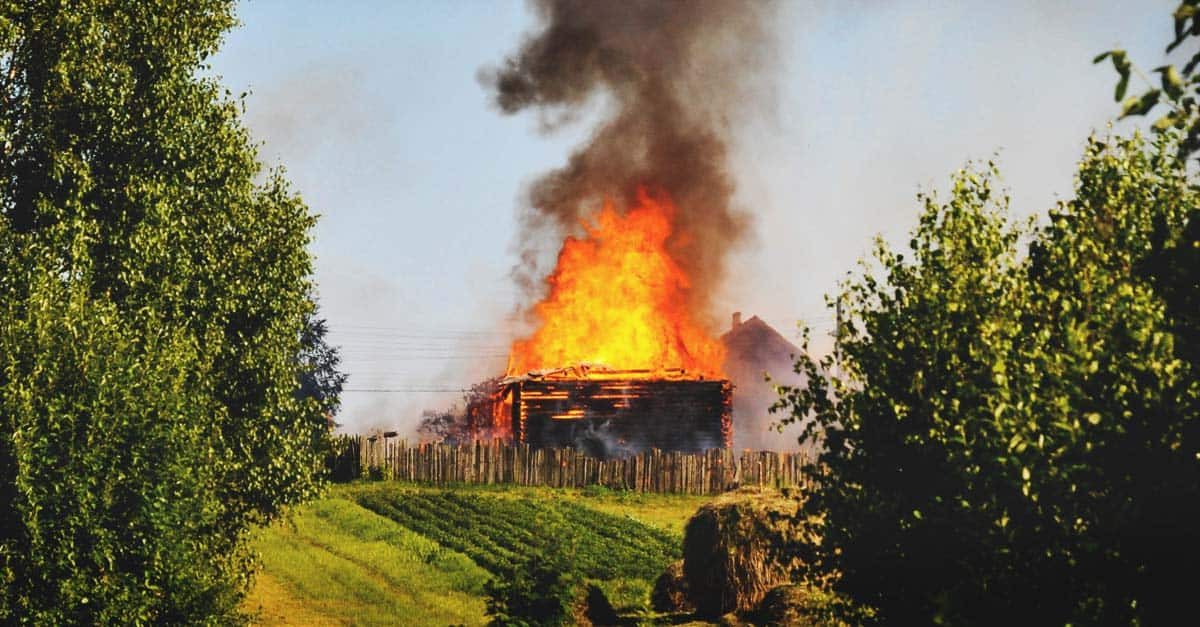
The Haybale That's Silently Heating to Ignition
Damp hay bales are a ticking time bomb. When hay is baled with moisture above 16-17%, internal heat builds without a visible flame. Push a temperature probe into the center of each bale; if it reads 150°F, the heat is still climbing and you need to intervene. At 175°F, call the fire department immediately because combustion is imminent. Most barn fires that start this way occur within six weeks of baling. The greener the hay, the looser it must be stacked to allow cooling and curing. Dry bedding multiplies the danger: straw can reach 300°F in just one minute, generating heat as fast as gasoline. You won't see the smolder until it becomes a blaze. Regular probing after stacking, plus moving any suspect bale to a concrete pad away from the barn, is the cheapest insurance a farmer can buy.
- Temperature: 150°F
- Temperature: 175°F
- Moisture: 16-17%
- Time: 6 weeks
Rewire Before a Frayed Cord Rewires Your Barn
Faulty electrical wiring ranks as the second most common cause of barn fires, right after cigarettes. Poor connections, damaged insulation, and overloaded circuits are the typical culprits. Have a certified electrician inspect every wire, fixture, appliance, and even pipe heating tape once a year. All wiring should run through PVC or metal conduit — never leave exposed cables or daisy-chained extension cords. Replace any frayed cord immediately and unplug equipment when it's idle. Water heaters and lighting systems deserve special scrutiny. Older barns often lack the circuit breakers and grounding that modern codes require, making them far more likely to ignite from a single spark. A hard-wired barn with protected wiring removes the most preventable ignition source you have. The annual inspection takes an afternoon but can prevent the fire that would erase decades of memories in half an hour.
- Frequency: annual
- Material: PVC
- Material: metal
- Source: electrical
The Cigarette Butt That Becomes a Blaze
Dropped cigarettes are one of the top two causes of barn fires, along with faulty electrical wiring. One stray ember landing in dry straw or bedding is all it takes, and the barn usually goes up before anyone notices. Enforce a strict no-smoking policy that covers not just the barn interior but the immediate surroundings. Post signs at entrances and remove every ashtray from the property. Designate a smoking area at least 100 feet away from any building, equipped with a metal container for disposal. The risk spikes between 7 pm and 7 am, when fewer people are awake to catch the first wisp of smoke. You cannot control a motorist flicking a butt from a passing road, but you can eliminate every lit cigarette on your own land. That single rule cuts the most common fire cause down to zero without costing a cent.
- Source: cigarettes
- Distance: 100 feet
- Time: 7pm-7am
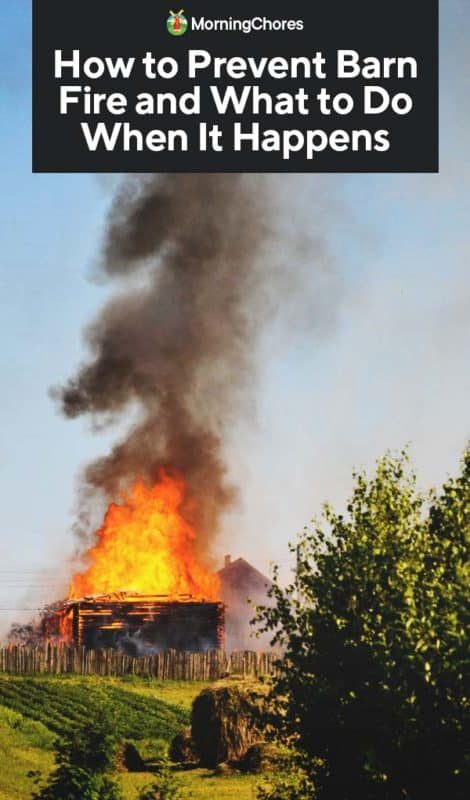
Steel Walls and a 100-Foot Buffer
What your barn is built from decides how fast a fire spreads. Wood frames and dry timber feed a blaze; steel construction is far safer and increasingly standard in new builds. When you select materials, check the flame spread rating — zero is ideal, and anything close to that gives you critical minutes. If your barn is older or self-built, consider retrofitting with fire-resistant sheathing or at least keeping the space between buildings wide. Ideally, buildings should be at least 100 feet apart; if that's not possible, install fire-rated walls between adjacent structures. Older barns are more likely to ignite simply because they weren't built to modern electrical and material codes. Newer barns often come with sprinkler systems and electrical shut-offs as standard equipment — features that can stop a fire before it takes hold. Your barn's construction is the longest-term decision you make, so it deserves the most planning.
- Material: steel
- Rating: 0
- Distance: 100 feet
The Night and Winter Window When Most Barns Burn
Barn fires are statistically more likely between 7 pm and 7 am, and especially during January, February, and March, when barns are full of bedding and heaters and fewer people are checking in. The danger compounds quickly: dry straw can hit 300°F in under a minute, releasing heat at the same rate as gasoline, so a single spark from a misused space heater can turn a stall into an inferno before you even smell smoke. That means vigilance must be deliberate. The available defenses each target a different stage: smoke detectors—tested twice a year—catch the fire early; a year-round water supply with a standard remote connector lets the fire department hook up fast; rooftop sprinklers can slow the flames while you evacuate. Fire extinguishers and hoses kept handy give you a chance to act yourself, but they only matter if you can reach them before the fire blocks your path.
- Time: 7pm-7am
- Time: Jan-Mar
- Frequency: twice a year
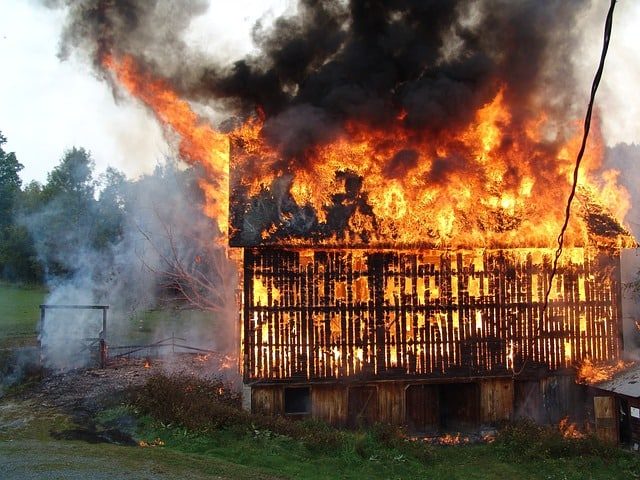
Space Heaters and Truck Exhaust: The Hidden Igniters
Space heaters and heat lamps are often unnecessary — livestock do fine with deep bedding and body heat, even in frigid weather. If you do use them, follow the manufacturer's instructions precisely and never leave them unattended. The more overlooked hazard is machinery exhaust. A truck or tractor driven into a hay storage area can ignite bales with its hot catalytic converter or exhaust pipe. Keep all vehicles out of the barn entirely; park them far from the structure. Store fuel and fuel tanks away from the building as well. Dry bedding is highly flammable, and a single contact with a hot surface is enough. Vehicle exhaust is a commonly overlooked ignition source that most owners never think about until it's too late.
- Source: space heater
- Source: heat lamp
- Source: exhaust
- Temperature: 300°F
Stall Doors That Swing Outward, Exits That Swing Open
When smoke fills a barn, panic sets in — for animals and people alike. If a stall door opens inward, a cow pressing against it in fear can wedge it shut permanently. You can't pull it open against a frightened animal's weight. That's why every stall door should open outward into the aisle or slide easily along a track. Install multiple exterior doors so there's always a way out, even if one side is blocked by fire. Keep latches simple: a single-handle lift, not a padlock or complex mechanism. All aisles must stay clear of equipment, rakes, trash, and baling twine — a dropped piece of debris can trip a fleeing animal or a person. Store halters and leads outside the barn, but close enough to grab in under a minute. Practice the evacuation route with anyone who works there, so muscle memory takes over when the alarm sounds.
- Action: doors outward
- Action: multiple exits
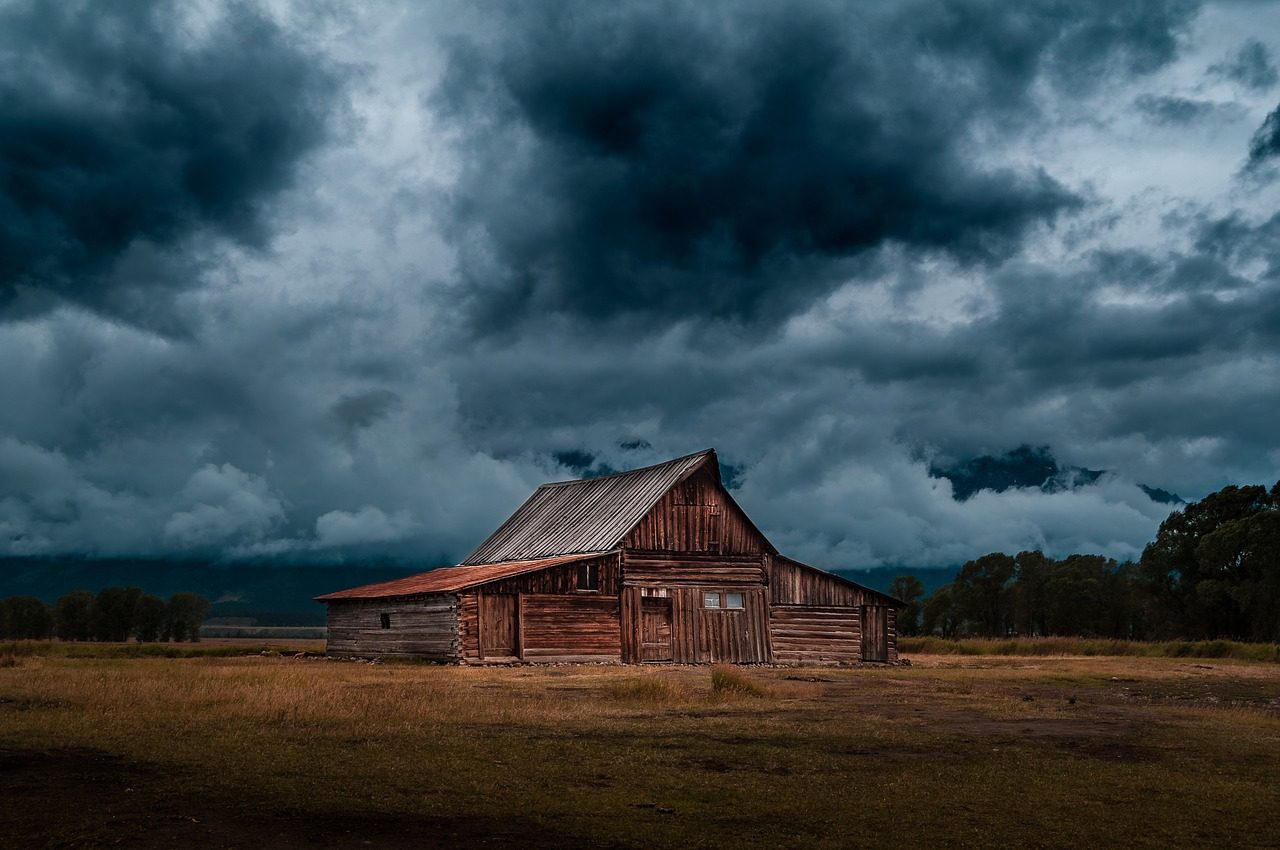
Water, Extinguishers, and a Lane a Fire Truck Can Use
When a fire does start, your success hinges entirely on having water on hand. Keep a reliable supply that works year-round, even in freezing temperatures, and install a standard remote connector that lets the fire department hook up immediately. Rooftop sprinklers are expensive but increasingly included in new barns — consider retrofitting them if you can. Keep multiple fire extinguishers mounted at eye level near every exit, and have backpack pump tanks, extra hoses, and foam suppressant ready as backups. The equipment doesn't help if you can't reach it, so store it in more than one location. Maintain an all-weather laneway graded and plowed so a fire truck can drive right up to the building; a muddy or snowed-in path can add minutes you don't have. Without water on hand, you're not fighting a barn fire—you're watching it.
- Equipment: fire extinguishers
- Equipment: backpack pumps
- Action: remote connector
Keep reading

6 Auto-Insurance Moves That Lower Your Premium, Not Your Protection
Understanding full coverage, using repair costs to set deductibles, cleaning your record, stacking discounts, weighing service over price, and blending digital quotes with human advice—these six tactics cut costs without cutting coverage.
7 DeWalt 20V MAX Tools Ace Hardware Is Bundling With a Free $169 Battery Kit
For a limited time, Ace Hardware throws in a 20V MAX XR Battery and Charger Starter Kit at no extra cost when you buy any of these bare tools from DeWalt's ATOMIC or XR lines.
7 Store-Bought Ant Killers, Tested for Six Weeks: The Weakness in Each
Six weeks of in-home testing rated seven ant killers on ease, effectiveness, and value, revealing the specific failure point of every product.